A Very Silent Auction
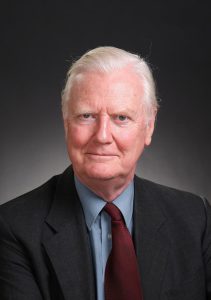
In celebration of what would have been Jim Mirrlees' 90th birthday, we invite you to participate in an auction of art, memorabilia, and books signed by Jim from his personal library, generously donated by Fiona Mirrlees, Patricia Mirrlees, and artist Yu Ji. All the proceeds will go towards establishing a fund in Jim's memory for scholarships and/or distinguished academic visitors to Nuffield College.*
The auction is now live! All bids must be in by 1.30pm BST (8.30am ET) on Saturday 4 July 2026.
How the bidding works
No one will know whether you have bid, or what you have bid on. The only exception is that Lottie Madden in the Development Office will know who has won what objects, and the prices they have to pay.
Rules: You can make as many bids as you like, which will represent your maximum willingnesses to pay, of any or all of the following kinds:
Simple bids: You can make one or more bids for a single object each. For example, you might bid £100 for the soap statue, and independently bid £150 for the bronze statue.
"OR" bids: You can also make bids of the form "I will pay £X for object A, or £Y for object B, or £Z for object C, or ...". In this case, at most one of these offers will be successful. For example, one OR bid might offer £200 for the soap statue or £300 for the bronze statue; it could win either statue, but not both. Similarly, an OR bid across several of Jim's books can win at most one of those books. If you submit separate bids that cover overlapping objects, however, those separate bids can each win one object.
"Any book" bids: "Any book" is a convenient shorthand for an OR bid that places the same value on every book in the auction. If you bid £40 for "Any book", the auction may allocate you any one book at a price up to £40, but this bid will never win more than one book. You can also combine "Any book" with named books in the same bid: for example, you might bid £40 for any book but £75 for a particular book you especially want. The bid remains an OR bid, so it can still win at most one book.
Outcome: The auction computes competitive-equilibrium prices and allocations, specifically the unique lowest prices that balance supply and demand. You will be contacted by the Development Office about your winnings. Packaging and shipping costs will be covered by Nuffield College.
For more background and why "truthful" bidding is generally the best strategy, see below. Paul Klemperer and Edwin Lock will be happy to answer any questions.
Items on offer
General items

Drum
More about the Auction
Many of you will recognise that this auction is similar to a Vickrey auction—named after Jim's co-Nobel prize winner—but the multiunit version of the Vickrey auction does not find competitive equilibrium. Our auction is in fact a simplification of the Product-Mix Auction that Paul Klemperer (Jim’s successor as Oxford’s Edgeworth Professor) designed for the Bank of England in 2007-8 at the beginning of the financial crisis. The Bank still runs its version regularly, and has sold almost £400 billion of repos using it. (We expect to raise a little less!)
This version has been programmed by Prof. Edwin Lock (Nuffield Research Fellow, 2021-24) who (along with Prof. Elizabeth Baldwin, Nuffield Research Fellow 2016-2017; MPhil Economics 2008) has been involved with Paul in the further development of the Product-Mix Auction.
For more on this auction, see this paper, or this 5-minute film published by the Guardian newspaper.
Equilibrium and "truthful" bidding
Each bidder's demand in this auction is captured by their bids, as described above. The auction will find the unique lowest competitive equilibrium prices. That is, it will find the unique lowest prices that balance supply and demand, assuming everyone has made bids that accurately reflect their true preferences. It will also allocate the goods according to competitive equilibrium.† It follows that if your bids accurately reflect your true preferences, you will be allocated whatever is best for you at the prices set by the auction: that is, whatever you would have chosen if you had known the final prices in advance. Moreover, you are unlikely to gain much, if anything, by choosing bids that misrepresent your preferences.‡ If any bidders are indifferent about whether, or what, they are allocated at the final prices, these ties are broken randomly.
Simple example: Suppose Paul bids £100 for the soap statue of Jim, and Lottie bids £150. Lottie wins: her bid is high enough to beat Paul's, and she pays £100. If Edwin also bids £125, Lottie still wins, but now pays £125. (With many OR bids, of course, the calculation is considerably more complex.) In this simple single-item case, if these bids are the bidders' true values, no bidder could have gained by choosing a different bid.
For more details, read this paper.
Why we are using this auction
The auction is designed to allocate the objects efficiently, not to maximise expected revenue. Auction payments do not have the tax benefits of gift aid, so those who feel they have not contributed enough are most welcome to make a separate, tax-efficient, donation*—but there is no pressure to do this; the auction will not tell us the willingness to pay that you stated.
Our rules mean:
- Those unable to be physically present can participate on the same terms as others.
- No one feels under any social pressure to participate. (And nor need anyone feel embarrassed by their bids showing publicly just how much they hero worship Jim!)
- The auction keeps the prices paid private (as we prefer).
- The auction should be more efficient, i.e., achieve higher “social welfare”, than standard “silent” or “live” auctions.
Paul and Edwin would be delighted to discuss our rules further with anyone interested.
* Auction payments cannot be gift aided. You can make a separate donation by contacting Caroline or Lottie at development@nuffield.ox.ac.uk or you can give here: https://www.campaign.ox.ac.uk/nuffield-college.
† It is a theorem that competitive equilibrium exists in this case, even though the goods are indivisible.
‡ If you only want to win one object, you cannot gain by misrepresenting your preferences. If you want to win more objects, you are welcome to ask Edwin at edwin.lock@kcl.ac.uk or Paul at paul.klemperer@nuffield.ox.ac.uk for advice.